
DNA was extracted from teeth or phalanx. Firstly, we conducted 2 hours UV irradiation on the samples, and removed a layer of surface using a sterile dentistry trill, then again irradiated with 1 hour UV-light on the samples. We drilled out ~80 mg of bone powder for every sample with the sterile dentistry trill, and only do 2 samples at one time (include following procedures until performing sequencing; samples from different archaeological sites were never handled together) to avoid potential individual cross-contamination. Using the 80 mg bone powder, we performed DNA extraction following the silica suspension protocol from an early report (Rohland and Hofreiter 2007), which was modified afterwards (Allentoft, et al. 2015) for customizing recovering of more shorter DNA fragments, that finally resulting a total of 100 μl aliquots for each sample. In brief, the bone powder was digested over night with proteinase K in 0.5M EDTA plus 10% N-Laurylsarcosyl suspension, then the released DNA was absorbed in solution which includes PB buffer, 5M sodium acetate, 5M sodium chloride and SiO2 suspension, and followed by three times of purification using 80% ethyl alcohol. Finally, after airing, the DNA was eluted with 100 μl EB buffer. Next, to perform preliminary aDNA preservation situation screening, using 20μl DNA aliquots of each sample, we built the double strand library (DSL) with no Uracil- DNA-Glycosylase (UDG) treatment under a single indexing with commercial kit (cat no: E7370) from New England Biolabs (Ipswich, MA) following the manufacturer’s guidelines, as previously reported (Meyer and Kircher 2010) that includes end prep, adaptor ligation, purification, PCR amplification and size selection steps. PCRs were conducted in a final volume of 50 μl using AmpliTaq Gold 360 DNA Polymerase (AmpliTaq Gold, Life Technologies Applied Biosystems) which is able to well amplify across uracils, preserve the DNA damage pattern that induced by deamination, which indicating of authentic aDNA (Krause, et al. 2010). We performed all the sequencing (also the following captured library sequencing) on the Illumina HiSeq X Ten (PE-150) platform (https://www.illumina.com.cn/systems/sequencing-platforms/hiseq-x.html). The calculated appraise indexes of aDNA quality and preservation are shown in Table S1. Lastly, we rebuilt the DSLs with 3 hours UDG treatment using the remaining DNA extraction aliquots, which could largely remove uracil residues from DNA fragmental end to leave abasic sites, and cuts the DNA at the 5´ and 3´ sides of the abasic sites with enzyme endonuclease VIII (Endo VIII). For these libraries, we performed the mtDNA capture using myBaits® Mito-Target Capture Kits as previous report (Enk, et al. 2014). Briefly, we used the biotinylated RNA “baits” that are transcribed from the human genomic DNA to perform the capture in solution overnight at 65°C, then mixed in streptavidin-coated magnetic beads and sequestered the targets with a magnetic stand. The PCRs for both pre-capture and post-capture are performed using KAPA HiFi Hot start Polymerase (KAPA BIOSYSTEMS).
851 133 2021-03-04

悬棺葬是将殓尸棺木高置于临江面海、依山傍水的悬崖峭壁上崖壁、洞穴、裂隙的一种葬俗。悬棺葬广泛分布于中国长江流域及其以南地区,在东南亚乃至太平洋群岛亦有较多的分布。随自然风化和人为破坏,这类遗迹越来越少。作为一种比较奇特而古老的考古文化遗存和丧葬习俗,悬棺葬文化一直受到考古学界的广泛关注。 测年方法:将悬棺上的木条样本送到美国Miami 的Beta Analytic testing laboratory进行C14测定。测定方法:4 in-house NEC accelerator mass spectrometers (AMS) and 4 Thermo IRMSs under strict chain of custody and quality control using ISO/IEC 17025:2005 testing accreditation PJLA #59423 accreditation protocols. 结果:测年结果表明,年代最早的悬棺葬遗址位于我国福建省武夷山地区,距今 3,600年,相当于我国的商周时期。福建武夷山地区被认为是悬棺葬习俗的发源地,尔后由该地区传播到了华南其它地区以及东南亚和太平洋群岛。位于川南和滇东北金沙江流域的悬棺葬是我国大陆境内年代最晚的悬棺葬文化遗存(明代末期),也是我国悬棺葬遗址分布的西极。在泰国西北部海拔较高的山区分布着一个悬棺葬群,距今2,100-1,200年。
864 126 2021-03-04
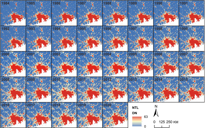
夜间灯光遥感(以下简称夜光)已经成为反映包括社会经济和能源消耗在内的人类活动的一个越来越重要的指标。现有夜光数据集(如美国国防气象卫星计划(DMSP)和国家极地轨道可见光红外成像辐射计(NPP))在时间范围和数据质量上都很有限。因此我们提出了一种夜间灯光卷积长短期记忆(NTLSTM)网络,并将该网络应用于生长出世界上第一套1984 - 2020年中国的人工夜间灯光数据集(PANDA)。模型与原始图像的模型评估显示,平均均方根误差(RMSE)达到0.73,决定系数(R2)达到0.95,像素级的线性斜率为0.99,表明生成产品的数据质量较高。模型结果可以很好地捕捉到新建成区的时间趋势。社会经济指标(建成区面积、国内生产总值、人口)与PANDA的相关性比现有的所有产品都更好,这表明它在寻找不同阶段夜间灯光变化的不同控制方面有更好的潜力。此外,PANDA描绘了不同的城市扩展类型,在代表道路网络方面胜过其他产品,并在早期提供了潜在的夜光景观。
5764 1067 2021-03-04
©
中国科学院青藏高原研究所
2012 -
|
联系我们
|
使用条款和免责申明
| 京ICP备05002818号-11
|
 京公网安备11010502040845号
 技术支持:中国科学院十三五信息化专项科学大数据工程项目
 2021-03-04
 851
 1